The Application of Reliability Testing in Aerospace
Aerospace products—such as rockets, satellites, aircraft, engines, and onboard equipment—demand the utmost, even stringent, standards for safety, reliability, and durability.
A single minor failure could lead to catastrophic consequences and immense economic losses. Therefore, reliability testing serves as a core component throughout the entire lifecycle of aerospace products, spanning design, R&D, manufacturing, testing, and operational maintenance.
Below, I analyze the importance of reliability to aerospace from the following perspectives:
Core Objectives For Environmental Testing Equipment in Aerospace
Defect Exposure: Simulate extreme conditions prior to product deployment to identify potential flaws in design, materials, or manufacturing processes.
Design Validation: Verify whether products meet design specifications and reliability requirements, providing data support for design improvements.
Cycle Reduction: Evaluate long-term performance degradation through accelerated aging tests within compressed timelines.
Safety Assurance: The paramount objective safeguarding astronaut/passenger lives and protecting equipment assets valued in the billions.
Compliance: Meeting stringent international/domestic airworthiness standards (e.g., FAA, EASA, CAAC) and aerospace standards (e.g., NASA, ESA).
Primary Testing Equipment Types and Applications
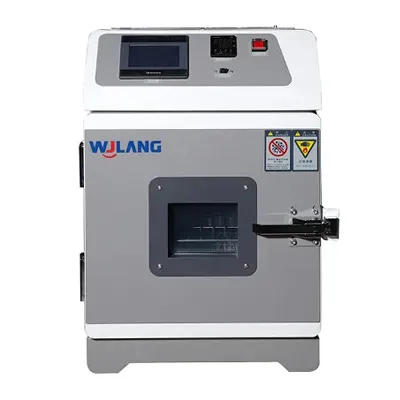
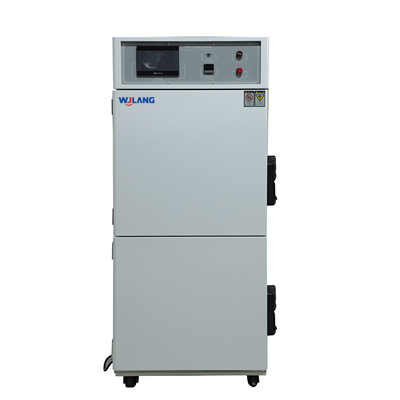
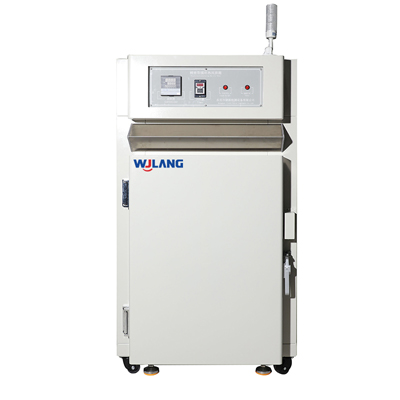
Reliability testing in aerospace primarily focuses on environmental and structural reliability. (Listing only equipment from Wujinglang)
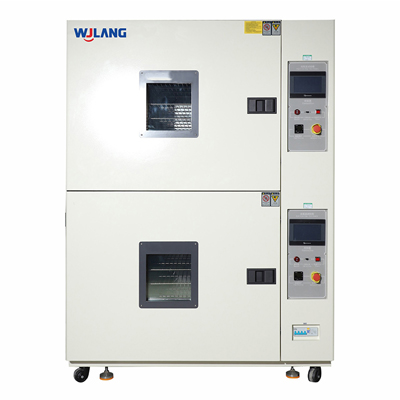
Climate Environmental Test Equipment
Equipment Description:
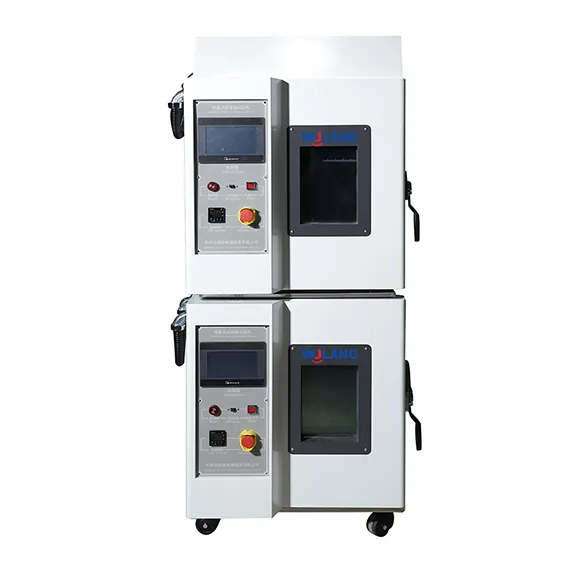
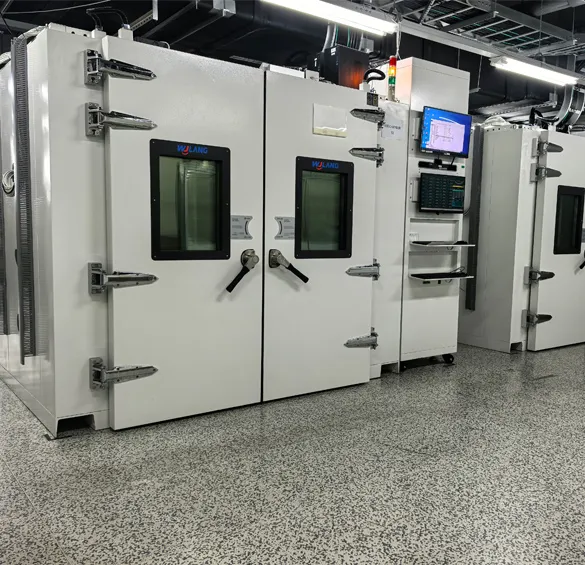
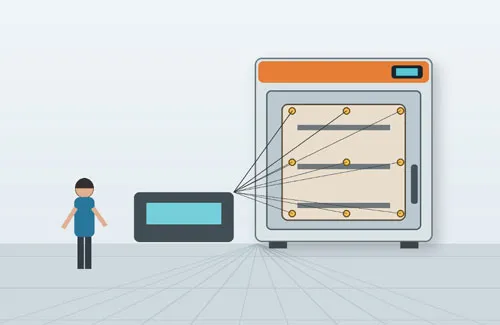
Includes high/low-temperature chambers, thermal shock chambers, humidity chambers, rain simulation chambers, and dust/sand chambers.
Application Scenarios:
High/Low Temperature: Simulates extreme temperature variations from Earth's surface to high altitudes, and from polar regions to the equator (e.g., -55°C to +125°C or broader ranges).
Thermal Shock:
Simulates rapid transitions from high-temperature desert environments to high-altitude cold conditions, testing material performance under thermal expansion and contraction.
Humidity/Heat:
Simulates high-temperature, high-humidity environments to evaluate material corrosion, mold growth, and insulation degradation.
Vacuum and Thermal Vacuum Test Equipment
Equipment Description:
Large vacuum chamber capable of simulating the high vacuum of space, equipped with heat sinks (liquid nitrogen or helium cooling) and infrared heating cages to replicate thermal cycling in space.
Application Scenarios:
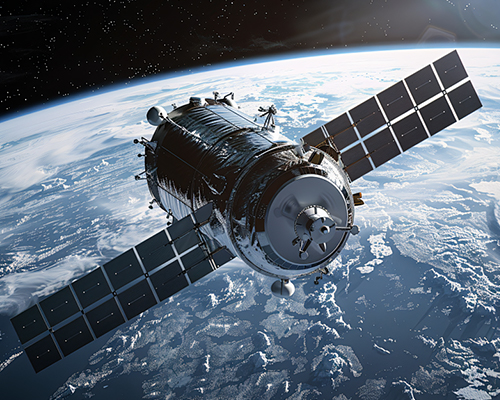
Specifically designed for spacecraft (satellites, space station components, probes).
Purpose:
Vacuum Discharge Testing: Evaluates whether high-voltage components experience dielectric breakdown or arc discharge in a vacuum environment.
Material Outgassing: Evaluates whether materials release volatile substances in vacuum, which may condense on optical lenses or sensors causing functional failure.
Thermal Cycling: Simulates extreme temperature fluctuations experienced by satellites transitioning between shadowed and sunlit regions, testing structural thermal deformation and electronic system stability.
Integrated Environmental Test Equipment
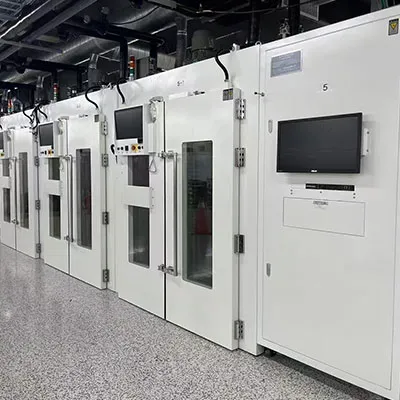
Equipment Description: Applies multiple environmental stresses (e.g., vibration + temperature + humidity) simultaneously to products, providing more realistic simulation of actual operating conditions.
Application Scenarios: Used for final qualification testing of critical components (e.g., aircraft engine controllers, flight control computers), effectively triggering latent failures undetectable by single-stress testing.

Development Trends of Environmental Testing Equipment
Intelligence and Automation: Utilizing AI and machine learning to optimize testing workflows, automatically identify failure modes, and enhance testing efficiency and accuracy.
Digital Twins: Establish digital twin models of products, combining virtual simulation with physical testing to reduce test cycles, lower costs, and shorten timelines.
Multi-Physics Coupling Testing: Simulate complex interactions among multiple physical fields (thermal, mechanical, fluidic, electrical) to realistically reproduce extreme operating conditions.
In-orbit/Online Monitoring: Employing sensor technologies like fiber optic gratings and acoustic emission for real-time health monitoring and early warning of spacecraft in orbit and aircraft in flight.
Conclusion of Environmental Testing Equipment in Aerospace
Reliability testing equipment serves as the "safety cornerstone" of the aerospace industry.
By subjecting products to rigorous 'stress' and "challenges," these systems ensure every component and system functions flawlessly under the most extreme conditions.
In essence, every successful launch and safe flight in aerospace owes its achievement to the immense contributions of these massive, precision testing facilities.
 English
  日本語
日本語  한국어
한국어  français
  Deutsch
  русский
  tiếng việt
  ไทย
ไทย  Malay
Malay 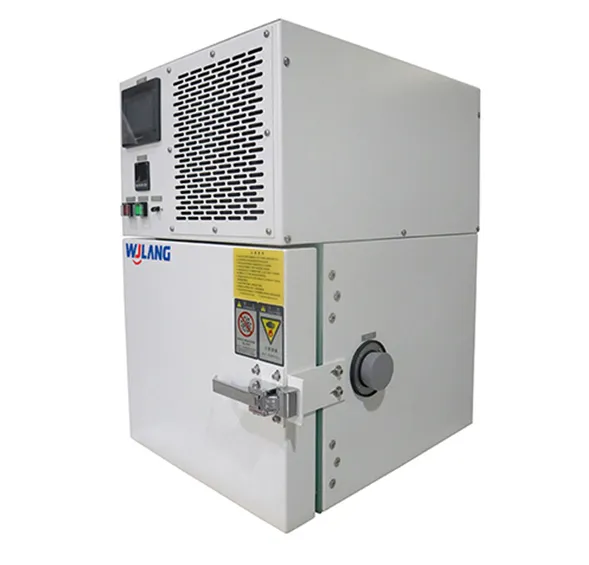
 Know More