English
  日本語
日本語  한국어
한국어  français
  Deutsch
  русский
  tiếng việt
  ไทย
ไทย  Malay
Malay E-mail:
RHY@wjlangtech.com
 Know More
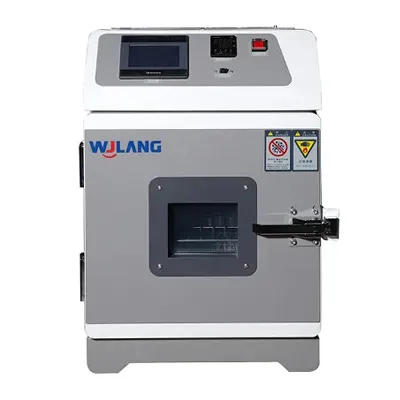
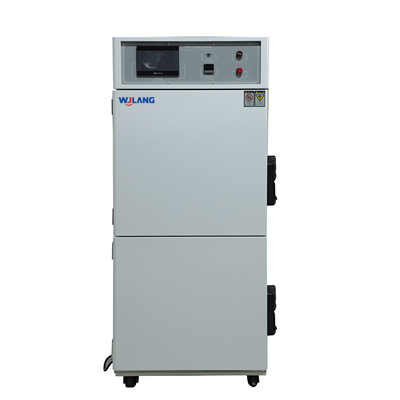
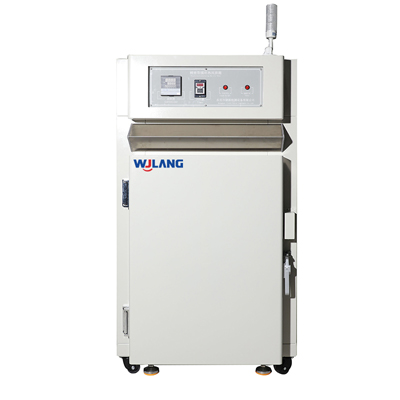
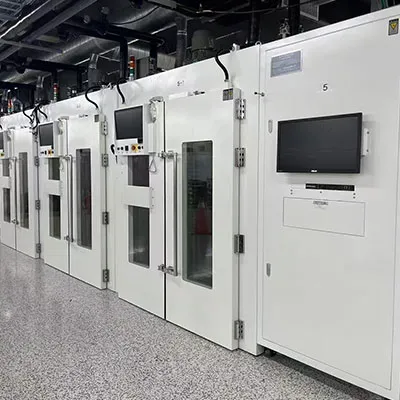
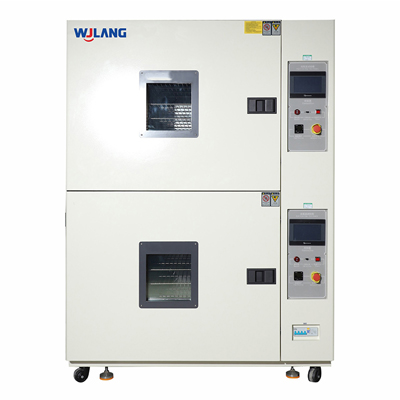
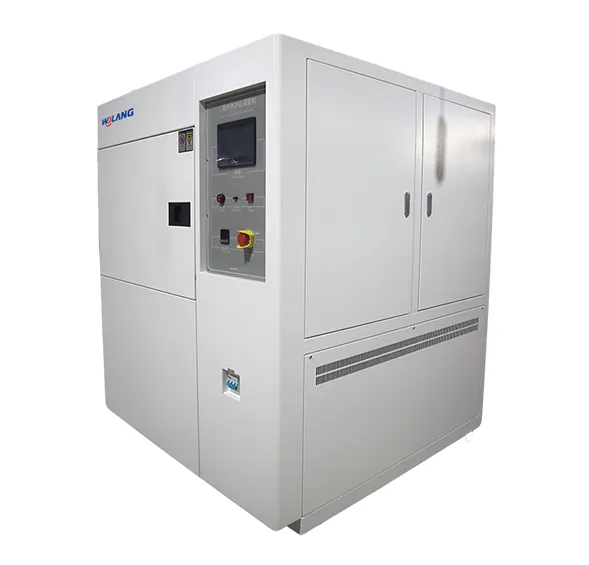
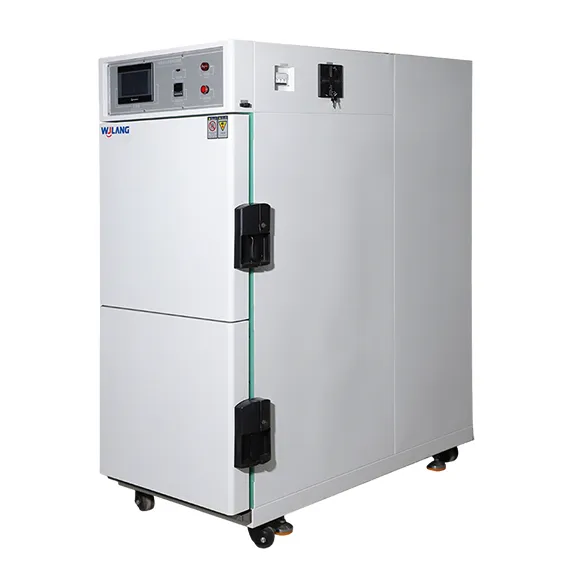
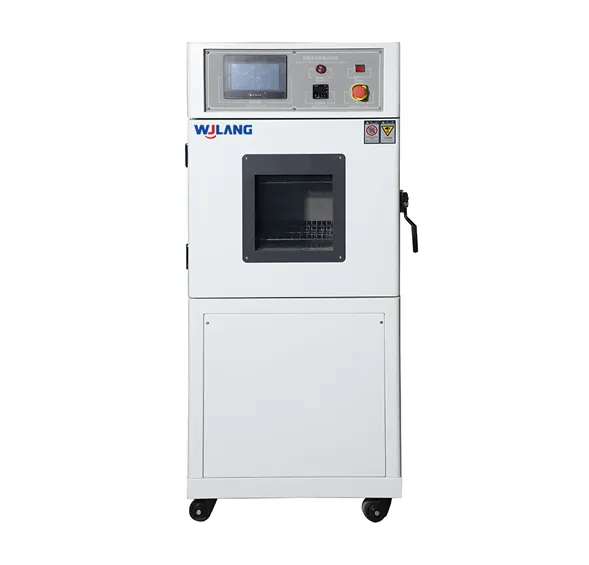
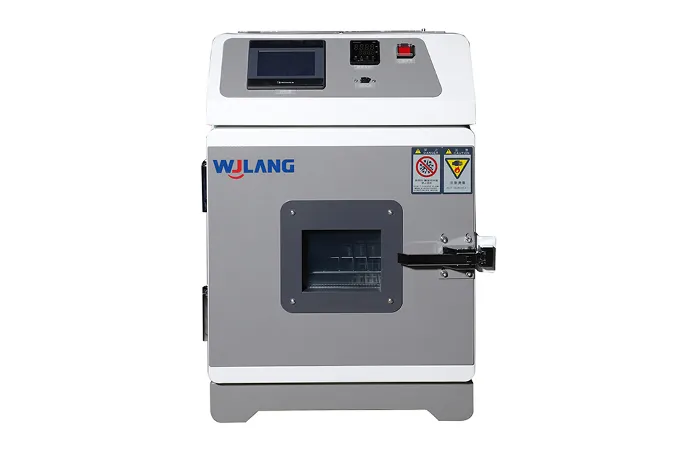
Benchtop temperature and humidity test chamber features a vertical or horizontal structure, compact design, small size, and fast heating and cooling, making it an ideal benchtop thermal chamber and benchtop environmental chamber for space-constrained laboratories.
The benchtop temperature and humidity chamber, also suitable as a benchtop humidity chamber, adopts a Chinese and English touch controller for easy operation, with a communication connection function (Rs485), reflecting the control flexibility offered by experienced temperature chamber manufacturers.
The door of the benchtop temperature and humidity chamber, a compact benchtop environmental test chamber, can change the opening direction according to the needs of work testing, and direct online testing can be carried out at the right place on the table. This flexibility distinguishes our benchtop temperature test chamber from conventional designs.
The benchtop temperature and humidity chamber is suitable as a benchtop stability chamber for R & D units,office buildings and other online test constant temperature and humidity testing requirements, making it a versatile small environmental test chamber solution for diverse applications.
| Product model | WJL-TOPH-22 | WJL-TOPH-30 | |||
| Inner box size(W*H*Dcm) | 30×30×25 | 35×30×28 | |||
| Outer box size(W*H*Dcm) | 44×69×69.5 | 84×69×54 | |||
| temperature range | (-40℃、-20℃~150℃) | ||||
| Temperature control stability | ±0.3℃ | ||||
| temperature distribution deviation | ±1°C (within -40°C~100°C) ±2°C (outside -40°C~100°C) | ||||
| Heating time | normal temperature→100℃25minute | ||||
| Cooling time | normal temperature→-20℃40minute、normal temperature→-40℃60minute | ||||
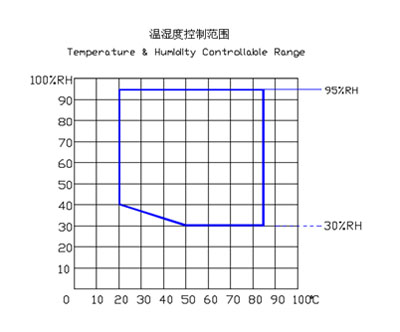
| Humidity range | 30%~95%RH | ||||
| Humidity control stability | ±2%RH | ||||
| Humidity distribution deviation | ±2.5%RH | ||||
| Temperature range | -40 ℃,-20 ℃~100 ℃ |
low temperature -40 ℃ or less machinesto high and low temperature machines | |
| Humidity range | 30%~95%RH |
| Inner tank capacity | 22L.30L |
| Optional | Glass window |
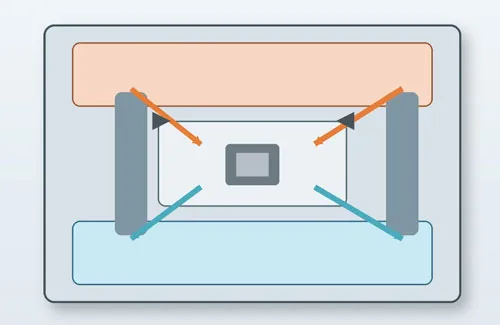
A benchtop temperature and humidity chamber is designed for controlled temperature and RH exposure in a compact workspace, while thermal cycling equipment is selected when repeated temperature ramps and faster heating or cooling are central to the test method. WJLANG’s bench-top humidity model focuses on stable temperature and humidity control, whereas its rapid-rate products are designed around faster temperature change. If the test requires repeated ramping rather than humidity conditioning, compare a benchtop thermal cycling chamber before specifying the compact humidity model. For routine compact-sample conditioning, a benchtop environmental chamber is the more direct fit when its 22 L or 30 L workspace and stated temperature/humidity range cover the specimen and test profile.
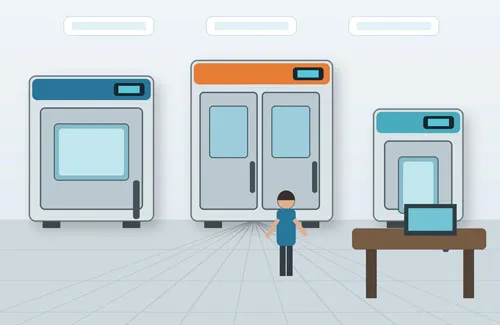
A benchtop environmental chamber is most suitable when test samples are compact and the chamber must operate close to the R&D bench or production line. WJLANG’s current bench-top models use 22 L or 30 L inner volumes, while the door opening direction can be adjusted according to the test setup. When evaluating a benchtop environmental test chamber, buyers should first confirm specimen dimensions, required cable access, the temperature and humidity profile, and whether the sample releases heat during operation. If the project needs more workspace or a broader choice of compact configurations, compare the related small environmental test chamber range before final model selection. Choosing by external size alone can leave insufficient airflow clearance around the specimen.
Compact volume makes sample placement more important. A benchtop stability chamber should not be evaluated only by empty-chamber temperature values, because large fixtures, closely packed samples, or energized specimens can affect airflow and recovery. WJLANG lists a temperature distribution deviation of ±1°C within -40°C to 100°C and ±2°C outside that range for the current bench-top models. Users should leave clearance around the specimen and confirm acceptance points under the intended load. If humidity control is not required and the method needs only compact temperature exposure, compare the dedicated temperature chamber benchtop product before choosing. A benchtop thermal chamber should match the real specimen size and operating test condition, not only the nominal chamber volume.