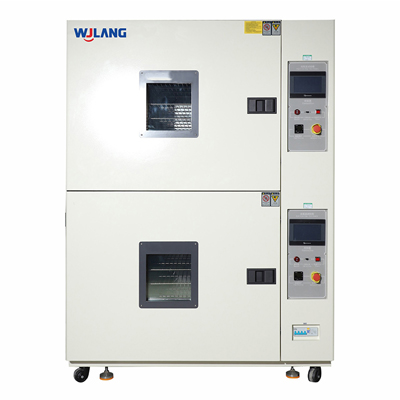
The Application of Reliability Testing in the Automotive Industry
Reliability testing equipment serves as the automotive industry's "quality examiner" and "durability examiner," ensuring every vehicle that rolls off the production line operates stably and safely under various demanding conditions.
The following sections provide detailed explanations from several perspectives:
What is Reliability Testing?
Before examining the equipment, it is essential to understand the essence of “reliability testing.” This process involves simulating the environmental, mechanical, and electrical stresses that automotive components, systems, and even entire vehicles may encounter throughout their lifecycle. Its core purpose is to proactively identify potential defects, evaluate longevity, and assess performance stability—effectively “eliminating problems in the lab, not letting consumers discover them on the road.”
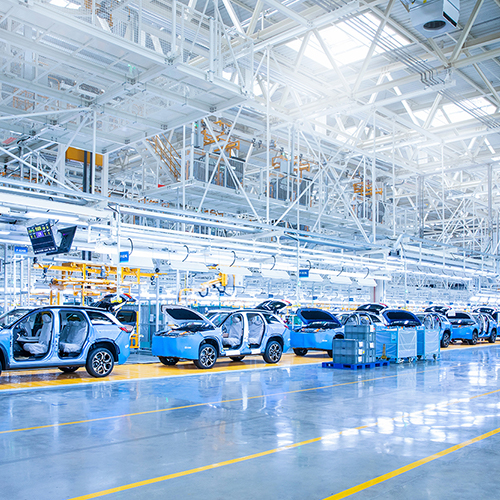
Primary Test Types and Corresponding Testing Equipment
Reliability testing equipment encompasses numerous categories. Focusing solely on Wujinglang's offerings, these are broadly classified as follows:
Environmental Reliability Testing Equipment
Simulates vehicle performance across diverse climates and geographical conditions, ensuring proper operation in extreme cold, intense heat, high altitudes, and humid environments.
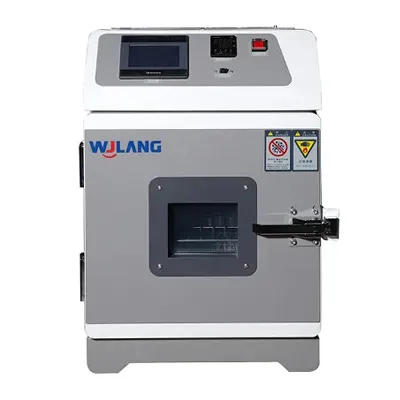
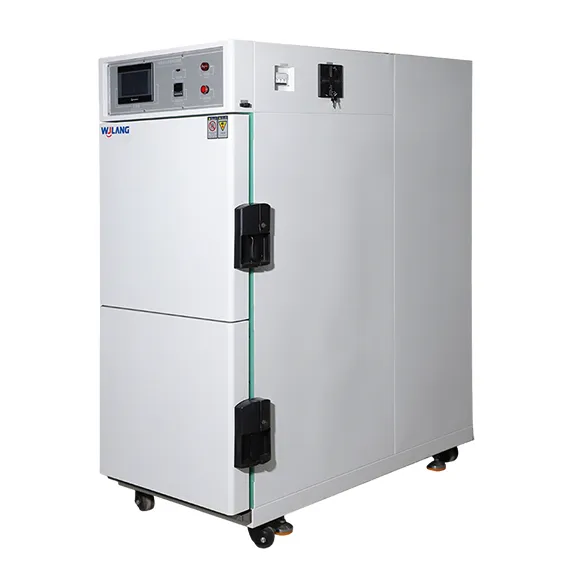
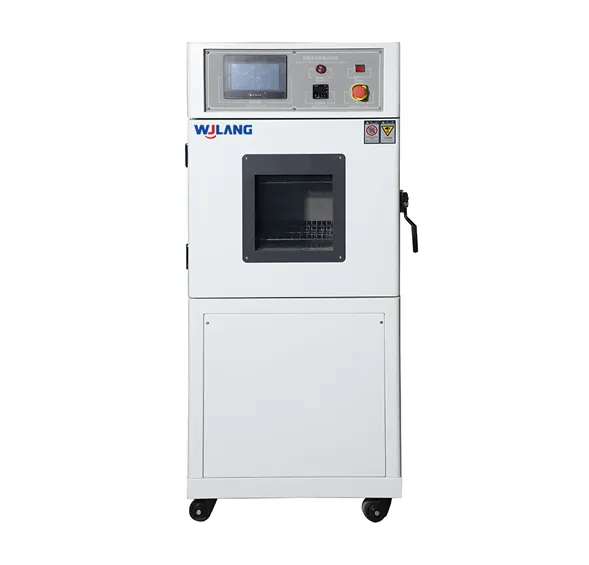
1. High/Low Temperature Test Chamber / Temperature-Humidity Cycling Test Chamber:
Function: Simulates temperature variations from extreme cold (e.g., -40°C) to extreme heat (e.g., +120°C), along with varying humidity conditions (e.g., 5%RH to 98%RH).
Test Subjects: Virtually all electronic components (ECUs, displays, sensors), batteries, plastic parts, seals, interior materials, etc.
Purpose: Evaluate material aging, deformation, cracking, electronic performance drift, condensation failure, etc.
2. Thermal Shock Test Chamber:
Function: Rapidly cycles between extreme high and low temperatures (typically within seconds) to induce severe thermal shock.
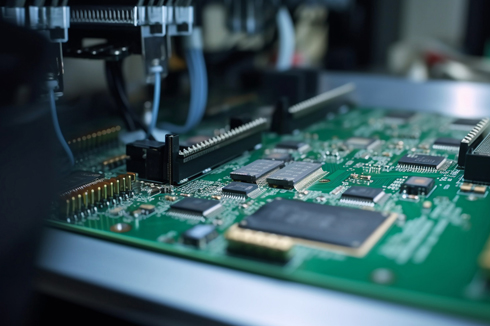
Test Subjects: Temperature-sensitive items like chips, solder joints, ceramic components.
Purpose: To test failures caused by internal stresses resulting from differing thermal expansion coefficients of materials, such as solder joint fractures or chip package cracking.
Mechanical Reliability Testing Equipment
Simulates physical stresses like vibration, impact, and fatigue experienced by vehicles during operation.
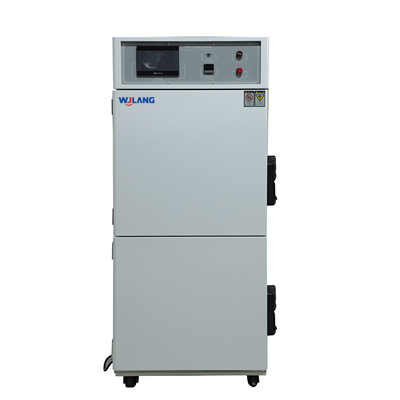
Tri-Environmental Test Chamber:
Function: Simultaneously applies temperature, humidity, and vibration stresses to test specimens, more realistically mimicking actual operating environments.
Test Subjects: High-value core components like engine ECUs, smart cockpits, and autonomous driving domain controllers.
Purpose: Conduct more rigorous and efficient reliability screening to identify compound failures not detectable by single-stress testing.
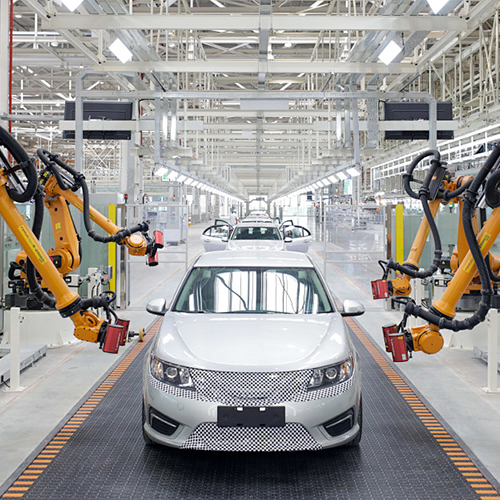
Specific Application Stages of Test Equipment in Automotive R&D and Manufacturing
R&D Stage:
Performs extreme testing on designed components and subsystems to uncover design flaws, providing data support for design improvements. Testing at this stage is typically the most stringent.
Production Phase:
Verify components produced by tooling and molds to ensure mass-produced items meet reliability requirements.
Incoming Inspection:
Conduct sampling tests on supplier-provided components to ensure incoming material quality reliability.
Quality Sampling & Failure Analysis:
Test finished products on the production line or market-returned faulty units to analyze root causes of failures.
Test Equipment Development Trends and Future Challenges
Special Requirements for New Energy Vehicles:
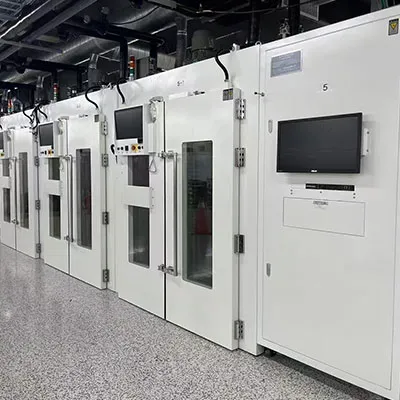
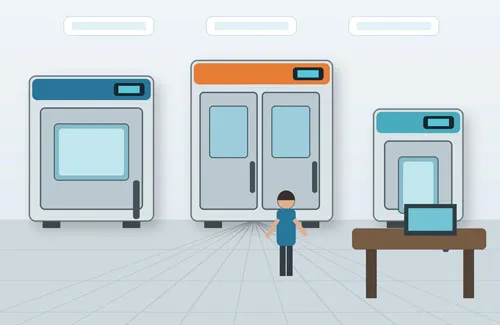
Extremely stringent testing demands for power battery packs necessitate large-scale combined temperature, humidity, and vibration test chambers to simulate performance degradation and safety throughout the battery's entire lifecycle. EMC and reliability requirements for motors and electronic control units also far exceed those of traditional fuel-powered vehicles.
Challenges for Intelligent Connected Vehicles:
Reliability testing of autonomous driving sensors (lidar, millimeter-wave radar, cameras) has become a new priority, requiring simulation of performance impacts from rain, ice, snow, and dirt accumulation. EMC testing for V2X (vehicle-to-everything) devices has also grown more complex.
Enhancing Test Efficiency:
Combining physical testing with simulation through automation and digital twin technology reduces testing cycles and costs, enabling faster iterations.
Conclusion For The Application of Environmental Test Equipment in the Automotive Industry
Through the above analysis, we can conclude that reliability testing equipment is an indispensable technological cornerstone of the automotive industry. They form a rigorous "quality network," comprehensively validating vehicle quality from microscopic chips to macroscopic vehicles, from frigid polar regions to scorching deserts, and from smooth highways to rugged off-road terrain. It is precisely through the thousands of rigorous tests conducted by these devices that the safety, comfort, and durability of our daily driving experience are most solidly assured.
 English
  日本語
日本語  한국어
한국어  français
  Deutsch
  русский
  tiếng việt
  ไทย
ไทย  Malay
Malay 

 Know More