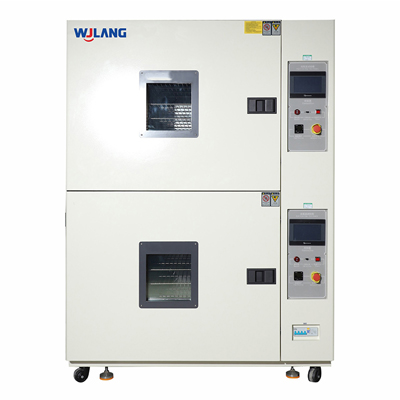
As the global EV (electric vehicle) market accelerates toward mass adoption, the demand for reliable, safe, and high-performing batteries has never been more critical. With extreme climate volatility across the globe, ensuring an EV battery's resilience to sudden temperature changes can make the difference between setting the benchmark in safety and risking dire consequences.
Thermal shock test chambers have become essential tools in engineering EV batteries capable of withstanding rapid, extreme temperature fluctuations, preventing catastrophic failures like thermal runaway. Let’s dive deep into the high-tech processes, challenges, and solutions that make WJLang the bridge between complex engineering and global EV safety.
The High Stakes of Temperature Volatility in EV Batteries
As climate conditions become increasingly erratic, EV batteries must endure natural temperature swings as well as artificial stress events engineered for testing purposes. But why isn’t traditional "weathering" or slow thermal cycling sufficient for modern safety protocols?
The Problem: Battery Vulnerabilities Under Rapid Temperatures
EV batteries are intricate assemblies of sensitive materials. When exposed to rapid temperature shifts—e.g., from -40°C to +150°C within seconds—the expansion and contraction of electrodes, separators, and housing materials can unveil fatal flaws. A slight seal rupture, electrolyte leakage, or material degradation can begin a chain reaction, jeopardizing not only the cell's life span but also passenger safety.
Common Failure Points Observed in Thermal Shock Testing:
Seal Breaches: Temperature swings can weaken the adhesives or enclosures, leading to permeability issues.
Electrolyte Leakage: Leaks may occur, compromising the battery’s dielectric strength and triggering internal short circuits.
Thermal Management Failures: Heat buildup during rapid cycling can exceed safety thresholds, challenging the cooling system’s efficiency.
By recognizing and addressing these failure points during testing, engineers ensure that EV batteries are robust enough for real-world application.
What Happens Inside a Thermal Shock Test Chamber?
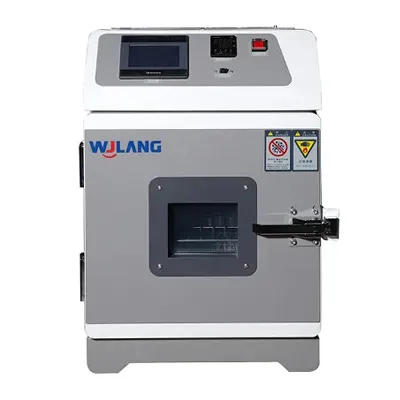
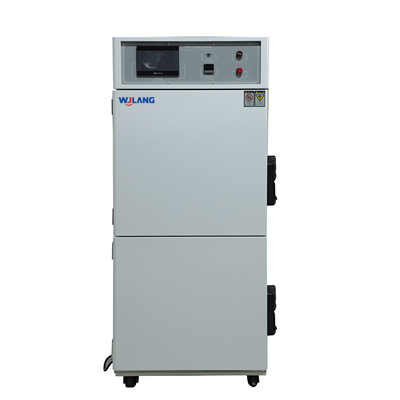
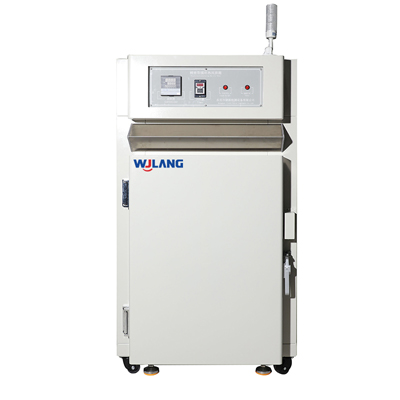
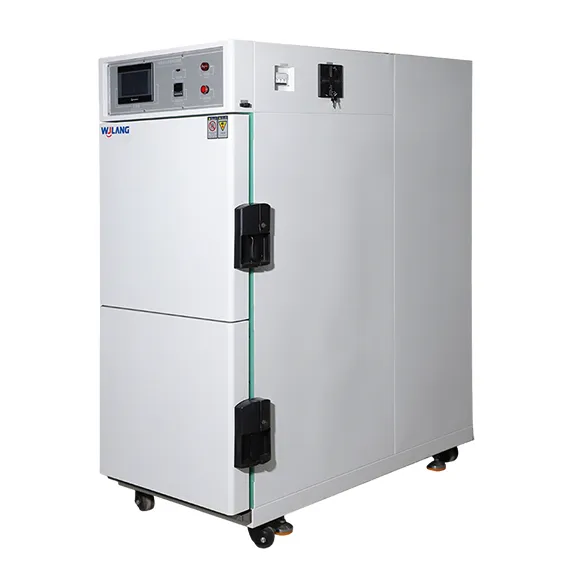
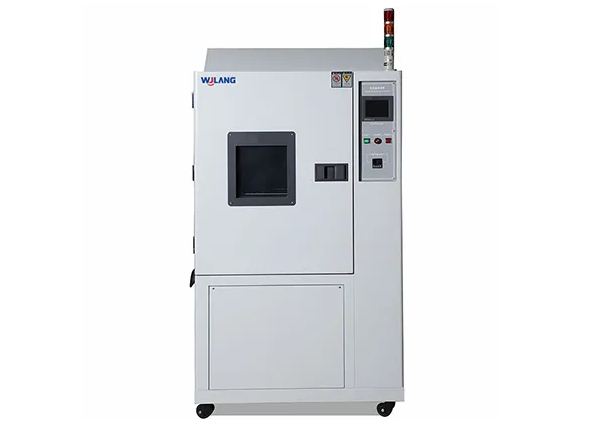
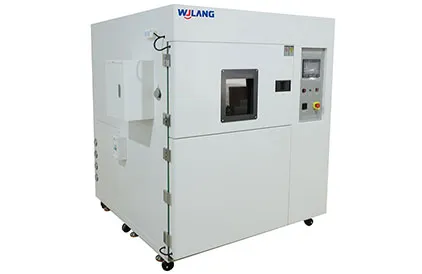
At the heart of thermal shock testing lies the ability to simulate the most punishing temperature transitions in a controlled, repeatable way. But not all thermal shock test chambers are created equal. Depending on the design, functionality, and recovery time, chambers deliver varied levels of accuracy.
Key Design Types: Three-Zone vs. Two-Zone Chambers
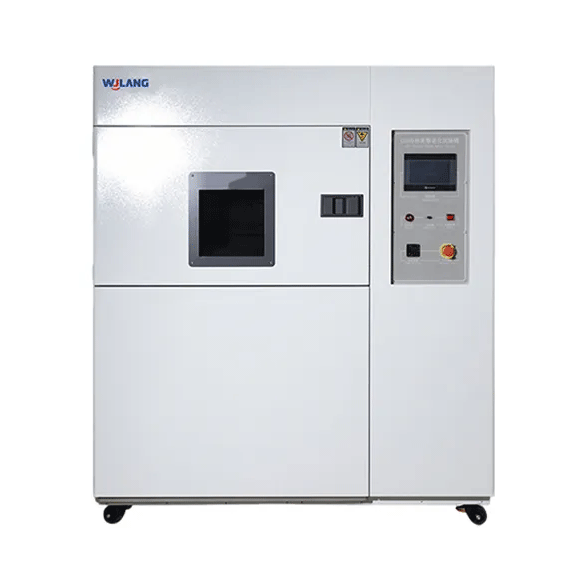
Three-Zone Chambers: Designed for maximum precision, these chambers include distinct hot, cold, and transfer zones. This ensures immediate temperature exposure without cross-contamination, offering superior accuracy and speed.
Two-Zone Chambers: Simplified in design, these alternate between hot and cold zones, suitable for applications with moderate precision requirements.
Pro-Tip for Precision: Why Recovery Time Matters
In professional-grade testing, time is critical. Recovery time refers to how quickly a chamber restores its target temperature after a test. Excess recovery time can invalidate results, failing to meet ISO or IEC regulatory standards. When selecting a thermal shock test chamber, always prioritize units with industry-leading recovery metrics to ensure the accuracy of your stress testing.
WJLang's advanced chambers feature minimal recovery times and cutting-edge transfer mechanisms to guarantee consistent and error-free testing in compliance with stringent benchmarks.
Preventing the "Thermal Runaway" Event
One of the most catastrophic outcomes during battery testing is a phenomenon known as thermal runaway—a self-sustaining reaction of uncontrolled heat production. This occurs when internal heat generation surpasses the battery’s ability to dissipate it, leading to potential fires, gas leakage, or explosions.
Behind the Scenes: What Happens During Thermal Runaway?
When an EV battery experiences extreme temperature changes:
Structural Degradation: Anode and cathode materials, exposed to rapid thermal shifts, may destabilize thermally or chemically.
Exothermic Heat Generation: Chemical reactions multiply heat output faster than it can dissipate.
Cascading Failure: Neighboring cells heat up due to thermal propagation, potentially leading to complete battery failure.
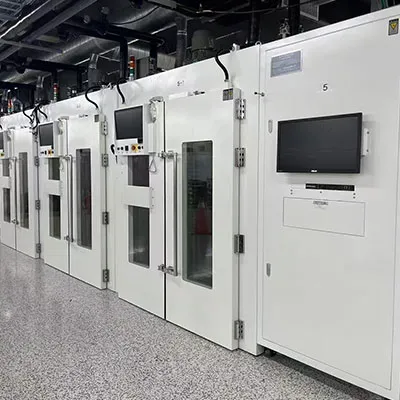
WJLang equips its chambers with safety containment technology to handle these stress tests safely. This allows engineers to perform “test-to-fail” scenarios without endangering personnel or equipment, accelerating innovation in battery safety.
Regulatory Compliance: Meeting Global Safety Milestones
EV battery designs must pass a stringent set of international and regional standards. Testing for compliance using thermal shock chambers ensures batteries meet these specifications before reaching the mass market.
Key Global Standards WJLang Chambers Support:
| Standard | Purpose | Temperature Range |
| UN 38.3 | Safe transport of lithium-ion batteries | Extreme shock temps to test cargo |
| UL 2580 | Battery systems for EVs | High resilience for EV scenarios |
| IEC 62133 | General safety for portable sealed batteries | Durable across all device classes |
Thermal shock test chambers provide not just verification of compliance but actionable data for design improvements, ensuring that battery prototypes are not only safe but also perform optimally in varied and extreme environments.
Choosing Reliable Thermal Shock Chamber Manufacturers
Given the high stakes of battery testing, selecting the right thermal shock chamber isn’t just about features—it’s about outcomes.
Outcomes That Matter:
Accuracy: High-quality chambers reduce false positives, ensuring reliable data for design decisions.
Durability: Made with corrosion-resistant materials, WJLang chambers are engineered for continuous, heavy-duty use.
Integration: Seamless compatibility with modern Battery Management Systems (BMS), enabling synchronized data logging and real-time monitoring.
The WJLang Edge:
WJLang’s cutting-edge chambers combine precision engineering and industry-leading support to help decision-makers and engineers future-proof their EV battery R&D.
Key Questions to Ask Your Manufacturer Before Purchase:
When evaluating thermal shock chamber manufacturers, be sure to ask:
How does your chamber optimize air/gas velocity for rapid transitions?
Are the sensors calibrated and compliant with ISO standards?
What is the energy efficiency rating of the refrigeration system?
Taking the time to address these questions ensures long-term value and consistent test results.
Conclusion: Engineering a Climate-Resilient EV World
In the race to meet global EV safety standards and remain competitive in an ever-evolving industry, thermal shock testing represents not just a challenge but a critical advantage. At WJLang, we believe that rigorous testing drives better engineering, stronger compliance, and ultimately, more reliable electric vehicles.
Vietnam Wujinglang Technology
Vietnam Wujinglang Co., Ltd. is a high-precision reliability test equipment R&D & manufacturing provider, offering global environmental simulation and extreme test solutions for electronics, automobiles, aerospace, adhering to customer-first culture for sustainable development.
 English
  日本語
日本語  한국어
한국어  français
  Deutsch
  русский
  tiếng việt
  ไทย
ไทย  Malay
Malay 
 Know More