In 2026, product teams are under pressure to release faster across every category — EV battery modules, consumer electronics, industrial controls, and automotive assemblies all face tighter validation timelines with less schedule buffer than five years ago. Thermal cycling is a core part of that validation process, and it sits at the center of a frustrating trade-off.
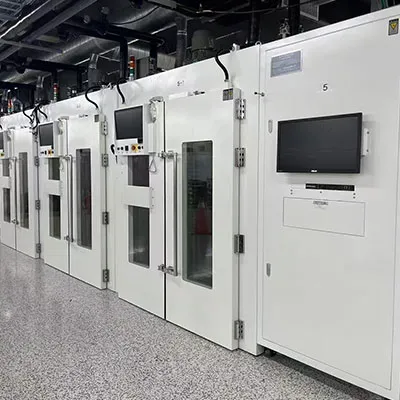
Running large environmental chambers in-house means carrying significant electricity OPEX — chambers that condition far more air volume than your device under test actually requires, running stabilization cycles that consume power before a single test data point is recorded. Sending samples to an external lab avoids that capital and energy burden, but replaces it with per-test invoices, shipping logistics, scheduling queues that can stretch days or weeks, and the engineering idle time that accumulates while your team waits for results before the next design iteration can begin.
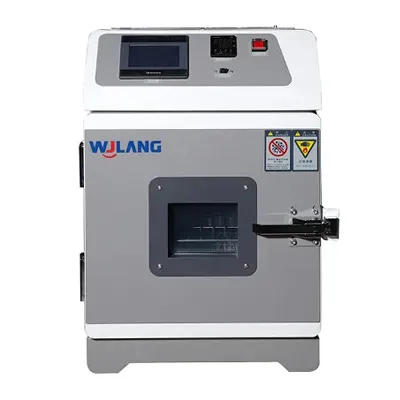
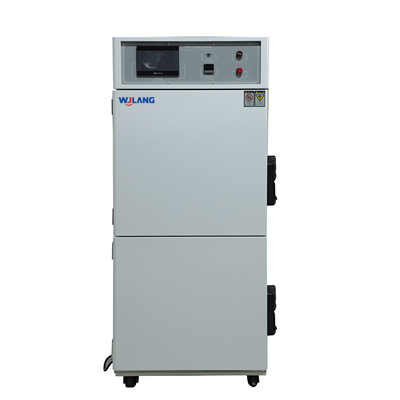
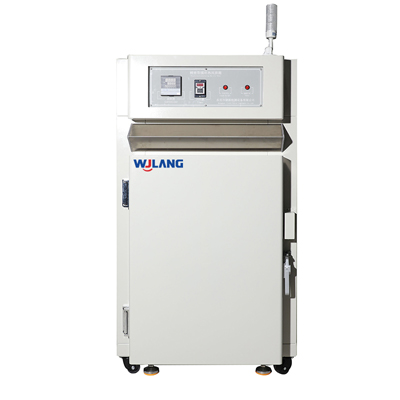
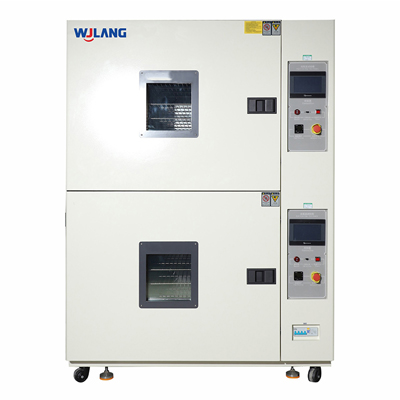
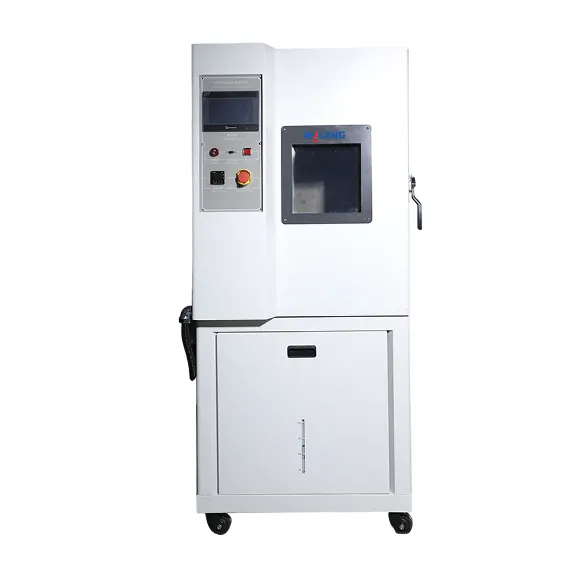
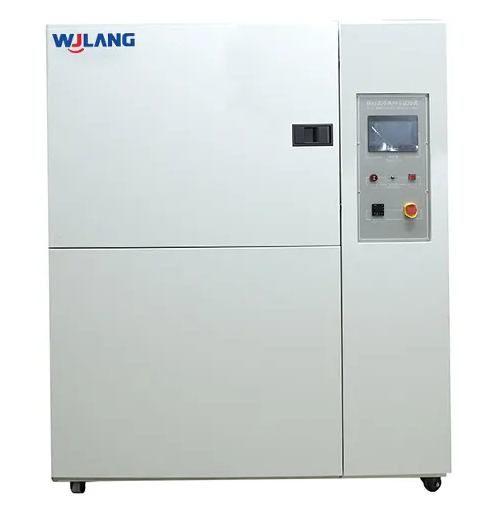
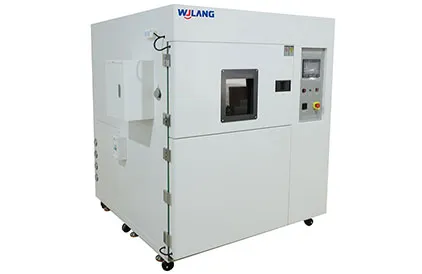
For many product and reliability teams, a compact thermal cycling chamber — right-sized to the actual DUT and the actual iteration cadence — is the most direct way to break that trade-off. Not by eliminating outsourcing entirely, but by bringing the high-frequency, short-cycle testing back in-house where it drives the most schedule value, and reserving external labs for certification peaks where their capacity and accreditation are genuinely needed.
This article builds the ROI case for that decision, covers the working principle and key specifications of a compact thermal cycle chamber, and provides a practical framework for calculating payback against your specific test volume and electricity rate.
Thermal Cycling Chamber vs Outsourced Testing Labs: The ROI Question You Should Be Asking First
The standard framing of the in-house vs outsourced testing decision focuses on CAPEX: the purchase price of a chamber versus the absence of upfront cost when using an external lab. That framing misses most of the actual cost.
The Hidden Cost of Outsourcing
External lab pricing is visible on the invoice, but the full cost of outsourced thermal cycling includes several line items that rarely appear in a direct comparison.
Per-test fees accumulate quickly on iterative development programs. A team running two to three design spins per month, each requiring a thermal cycling sequence, can generate significant annual lab spend before accounting for any rush fees. Rush fees — charged when your schedule requires faster turnaround than the lab's standard queue — are common in development programs and can add 30 to 100% to the base test price.
Queue time is the cost that most directly affects time-to-market. If an external lab has a two-week queue and your design iteration cycle is four weeks, you are spending half of every iteration cycle waiting for test results rather than acting on them. At a fully-loaded engineering burn rate, two weeks of idle time per iteration is a material cost — one that does not appear on any lab invoice but is real.
Sample logistics — packaging, shipping, customs for cross-border programs, and the risk of damage in transit — add both cost and schedule uncertainty. Re-test cycles, when samples arrive damaged or results are disputed, multiply all of these costs.
The Hidden Cost of Oversized In-House Chambers
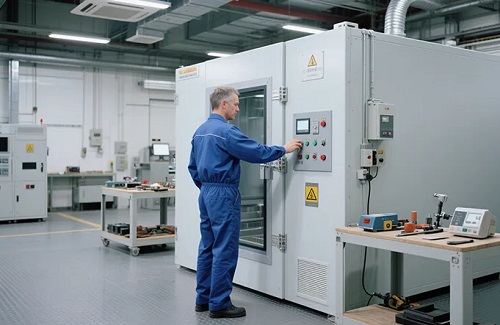
Large environmental chambers solve the outsourcing problem but introduce a different one. A chamber with a 500-liter working volume conditioning air to -40°C for a PCBA that occupies 2 liters of that volume is paying to condition 498 liters of air it does not need. The refrigeration system, heater, and airflow management are all sized for the full chamber volume, and the energy consumption reflects that — regardless of how small the actual test load is.
Long stabilization times in large chambers compound the energy waste. A chamber that requires 45 minutes to reach setpoint and stabilize before a test can begin is consuming power for 45 minutes per cycle before any useful test data is generated.
The Decision Trigger
The in-house case becomes compelling when two conditions are met: test frequency is high enough that avoided lab fees and queue time savings generate meaningful annual value, and the DUT is small enough that a compact chamber can be right-sized to the actual load. For most R&D and NPI programs running weekly or more frequent thermal cycling on PCBAs, modules, or small assemblies, both conditions are typically satisfied.
Thermal Cycle Chamber Working Principle: Why Compact Rapid-Rate Designs Cut Cost per Cycle
A thermal cycling chamber works by repeatedly ramping the temperature of a conditioned working volume between a low setpoint and a high setpoint, with controlled soak periods at each extreme. The specimen experiences repeated thermal expansion and contraction, which accelerates fatigue mechanisms in solder joints, connector contacts, adhesive bonds, and material interfaces — revealing reliability risks in compressed time compared to field exposure.
The key variables that define a thermal cycling profile are the temperature range (low and high setpoints), the ramp rate (degrees per minute between setpoints), and the soak time (duration at each extreme). These parameters are specified by the applicable test standard — IEC 60068-2-14, JEDEC JESD22-A104, or an internal qualification specification — and they determine the total cycle time and the number of cycles required to complete a test sequence.
Why Compact Designs Are More Efficient for Small DUTs
The energy consumed per completed test cycle is a function of the thermal mass that must be heated and cooled during each ramp. In a large chamber, that thermal mass includes the chamber walls, internal fixtures, airflow ducting, and the conditioned air volume — most of which is not the specimen. In a compact bench-top chamber right-sized to the DUT, the thermal mass is dominated by the specimen and its fixture, and the refrigeration and heating systems are sized accordingly.
The practical result is lower kWh per completed cycle for small DUTs in a compact chamber compared to the same DUT in a large chamber. The ramp rate is also typically faster in a compact chamber for the same reason — less thermal mass to move means the temperature transitions more quickly, which reduces total cycle time and increases the number of cycles completable per day.
This is not a capability reduction. It is capacity right-sizing. A compact rapid-rate thermal cycle chamber running a small PCBA through 500 cycles in the same elapsed time that a large chamber completes 300 cycles is delivering more test throughput per kWh — which is the metric that determines cost per validated design.
Key Specs and Configurations for a Rapid-Rate Thermal Cycling Chamber
Selecting the right thermal cycling chamber requires matching specifications to your actual test requirements — not to the maximum possible requirement. Over-specifying drives up purchase price, energy consumption, and operating cost without improving test validity.
Specification Checklist
Parameter
What to Specify
ROI Implication
Working volume
Match to DUT and fixture dimensions with clearance
Oversized volume increases energy cost per cycle
Temperature range
Low and high setpoints required by your standard
Unused range capability adds cost without benefit
Ramp rate
Degrees per minute required by your test profile
Faster ramp means shorter cycle and more tests per day
Temperature uniformity
Tolerance across working volume at setpoint
Poor uniformity causes retests — the most expensive waste
Stability
Deviation at setpoint during soak
Affects data validity and audit defensibility
Controller and data logging
Recipe control, alarm management, audit-ready records
Enables unattended runs and reduces operator labor per cycle
Feedthroughs and ports
Pass-through ports for powered testing and sensor cables
Required for functional testing during cycling
Fixture options
Shelves, racks, custom fixtures
Affects sample density per run
The Uniformity and Repeatability Link to ROI
Temperature uniformity and stability are the specifications most directly linked to retest rate — and retest rate is one of the largest hidden costs in thermal cycling programs. A chamber that produces non-uniform temperature distribution across the working volume creates specimen-to-specimen variation in the thermal stress applied, which can produce inconsistent results that require investigation and re-testing.
A chamber with verified uniformity within ±2°C across the working volume at setpoint produces repeatable, defensible data. A chamber with ±5°C uniformity may produce results that are questioned during design review or qualification audit, triggering retests that consume chamber time, energy, and engineering labor at full cost with no productive output.
When evaluating compact thermal cycling chambers, request uniformity verification data under load — not empty-chamber specifications — and confirm that the controller supports recipe-based test execution with timestamped data logging for audit traceability.
Applications Where In-House Thermal Cycling Pays Back Fast
The ROI case for in-house thermal cycling is strongest in specific application profiles. These are the scenarios where avoided lab fees and schedule value combine to generate the fastest payback.
R&D Iteration Loops
Design iteration is where in-house thermal cycling delivers the highest schedule value. A team evaluating component substitutions, solder profile changes, conformal coating formulations, or PCB layout modifications needs thermal cycling results to make the next design decision. With an in-house chamber, that result is available the next morning. With an external lab, it is available in two weeks — after which the next iteration begins its own two-week queue.
Across a six-month development program with eight design iterations, the difference between two-day and two-week turnaround is the difference between completing the program on schedule and missing a product launch window.
Pilot Builds and NPI Screening
New product introduction programs benefit from daily thermal cycling screening of pilot build samples to catch infant mortality failures before production ramp. This type of screening — running small batches of samples through abbreviated thermal cycling sequences to verify process consistency — is high-frequency and low-volume, which is exactly the profile where a compact in-house chamber is most cost-effective compared to external lab pricing.
Supplier Qualification and Incoming Quality
Comparing component suppliers or verifying incoming material consistency requires thermal cycling on small sample sets, often on short notice. External lab scheduling is poorly suited to this use case — the test volume is too small to justify the logistics overhead, and the schedule flexibility required is incompatible with lab queue management. An in-house chamber handles these tests as a routine daily activity.
Failure Analysis and Field Issue Reproduction
Reproducing field failures requires the ability to run custom thermal profiles on specific specimens, often iteratively, until the failure mode is reproduced and documented. This is difficult to manage through an external lab — the iteration speed is too slow and the profile customization requirements are too specific. In-house capability makes failure analysis a same-week activity rather than a multi-week project.
Installation, Maintenance, and TCO: Running In-House Without Making It a Full-Time Job
Installation Requirements
Compact bench-top thermal cycling chambers are designed for standard lab environments. The main installation considerations are:
Power supply: confirm voltage, phase, and amperage requirements match your lab's available supply. Most compact chambers operate on single-phase or three-phase power at standard industrial voltages.
Heat rejection: the chamber's refrigeration system rejects heat to the ambient environment. Confirm that the installation location has adequate ventilation to prevent heat accumulation, which degrades refrigeration efficiency and increases energy consumption.
Bench space and clearances: confirm minimum clearance distances on all sides for airflow and maintenance access. Most compact chambers require 200 to 400mm clearance on heat rejection sides.
Network and data: if remote monitoring or data export is required, confirm network connectivity at the installation location and compatibility with your data management system.
Maintenance Basics
The maintenance activities that most directly affect TCO are condenser and filter cleaning, door seal inspection, and periodic calibration verification.
Fouled condensers increase compressor run time and reduce ramp rate performance — the same degradation that increases energy consumption per cycle and reduces throughput. A monthly cleaning schedule for condenser fins and intake filters is the single highest-return maintenance activity for most labs.
Door seal wear allows conditioned air to escape and ambient air to enter, increasing the energy required to maintain setpoint and reducing temperature uniformity. Visual inspection at each calibration interval catches seal degradation before it affects test data.
Calibration verification — confirming that temperature sensors read accurately and that uniformity across the working volume is within specification — should be performed at least annually and after any significant maintenance event. Sensor drift that goes undetected produces invalid test data, which is discovered during design review or qualification audit and triggers retests.
TCO Calculation Framework
Annual energy cost
= kWh per day × operating days per year × electricity rate

Annual outsourcing cost avoided
= tests per year × (lab fee per test + shipping + rush fees)

Schedule value
= weeks of queue time saved per year × engineering burn rate per week

Annual total benefit
= energy cost avoided + outsourcing cost avoided + schedule value

Payback period
= (purchase price + installation cost) ÷ annual total benefit
For a team running 3 thermal cycling tests per week at an average external lab cost of $400 per test including shipping, the avoided outsourcing cost alone is approximately $62,000 per year. A compact chamber in the $25,000 to $40,000 price range reaches payback in under 12 months from avoided lab fees, before counting schedule value or energy savings versus a large chamber.
ROI Decision Flow: In-House vs Outsourced Thermal Cycling
Alt text: ROI decision workflow comparing outsourced thermal cycling to purchasing a compact thermal cycling chamber, including energy cost, utilization, avoided lab fees, and time-to-market schedule value.
Caption: A practical 2026 ROI model for thermal cycling chamber decisions — right-size the chamber to the DUT, quantify avoided lab fees and queue time, and include schedule value as a line item. For most R&D teams running weekly test cycles, payback is under 12 months.
Conclusion
If your team is paying high OPEX to run oversized environmental chambers, or losing weeks of development schedule to external lab queues, the ROI case for a compact rapid-rate thermal cycling chamber is straightforward to build — and for most programs running frequent iterations on small DUTs, payback arrives within the first year from avoided lab fees alone.
The goal is not to eliminate external testing. It is to bring the high-frequency, iteration-driving thermal cycling back in-house where it generates the most schedule value, and to right-size the equipment to the actual test load so that energy consumption per cycle reflects the DUT — not the chamber volume.
Lower cost per validated design and faster releases in 2026 start with the right chamber specification.
Get Your Recommended Configuration and ROI Estimate
Visit the product page for compact rapid-rate thermal cycling chambers to browse available configurations, then submit the following details to receive a matched specification and ROI estimate:
Parameter
What to Provide
Work condition
Standard or profile (temperature range, soak time, ramp rate), operating hours per day, ambient constraints
Quantity
Samples per run, cycles per week, expected annual test volume
Size and spec
DUT dimensions and weight, fixture mass, required working volume, feedthrough requirements
Target metrics
Ramp rate, uniformity, uptime target, kWh per day target, time-to-market reduction goal
Current problem
High electricity bills, long stabilization time, outsourced lead time, retest frequency, schedule delays
FAQ
1. What is a thermal cycling chamber?
A thermal cycling chamber is an environmental test system that repeatedly changes temperature between set high and low points with controlled ramp rates and soak periods. The purpose is to accelerate thermally induced fatigue mechanisms — solder joint cracking, connector degradation, adhesive failure, material delamination — so that reliability risks are revealed in compressed test time rather than through field exposure. Compact bench-top versions are designed for small DUTs and high-frequency iteration cycles, and are also referred to as thermal cycle chambers.
2. How does a thermal cycling chamber compare to outsourced lab testing or a large in-house environmental chamber?
Outsourced lab testing requires no capital investment but charges per test, adds shipping and logistics overhead, and introduces queue delays that slow design iteration. A large in-house chamber provides flexibility for big assemblies but consumes significant energy to condition volume that small DUTs do not use, and stabilization times add non-productive energy consumption per cycle. A compact in-house thermal cycling chamber is optimized for small DUT throughput and frequent iteration — it reduces energy per cycle by right-sizing the conditioned volume, eliminates outsourcing fees and queue delays, and is the most cost-effective configuration for R&D and NPI programs running weekly or more frequent test cycles.
3. How do we estimate ROI and payback accurately?
Start with your actual test frequency and external lab cost per test including shipping and any rush fees. Multiply tests per year by total cost per test to get annual outsourcing spend. Add a schedule value line item — estimate the weeks of queue time saved per year and multiply by your engineering burn rate or a revenue impact proxy for delayed launches. Subtract the annual energy cost of the compact chamber and annual maintenance cost. Divide total purchase and installation cost by annual net benefit to get payback period. For most teams running three or more thermal cycling tests per week, payback from avoided lab fees alone is under 12 months.
4. Do we need to retrofit our lab to add an in-house thermal cycling chamber?
Generally no. The main requirements are confirming power supply capacity at the installation location, ensuring adequate ventilation for heat rejection, verifying bench space and clearance dimensions, and setting up data logging connectivity if remote monitoring is needed. Most changes are procedural — writing SOPs, establishing a calibration schedule, and setting up safety checks — rather than facility modifications. Compact bench-top chambers are designed for standard lab environments without special infrastructure.
5. What parameters do we need to provide to get the right thermal cycling chamber specification?
At minimum: temperature range (low and high setpoints), required ramp rate in degrees per minute, soak time at each extreme, DUT dimensions and weight including fixture mass, required working volume, number of samples per run, weekly cycle demand, feedthrough or port requirements for powered testing, data recording and traceability requirements, and your primary pain point — whether that is energy cost, outsourced lead time, throughput, or repeatability. If you have an existing test standard or internal qualification specification, sharing that document allows the most precise configuration recommendation.
Vietnam Wujinglang Technology
Vietnam Wujinglang Co., Ltd. is a high-precision reliability test equipment R&D & manufacturing provider, offering global environmental simulation and extreme test solutions for electronics, automobiles, aerospace, adhering to customer-first culture for sustainable development.
We use cookies to offer you a better browsing experience, analyze site traffic and personalize content. By using this site, you agree to our use of cookies.
Visit our cookie policy to learn more.
 English
  日本語
日本語  한국어
한국어  français
  Deutsch
  русский
  tiếng việt
  ไทย
ไทย  Malay
Malay 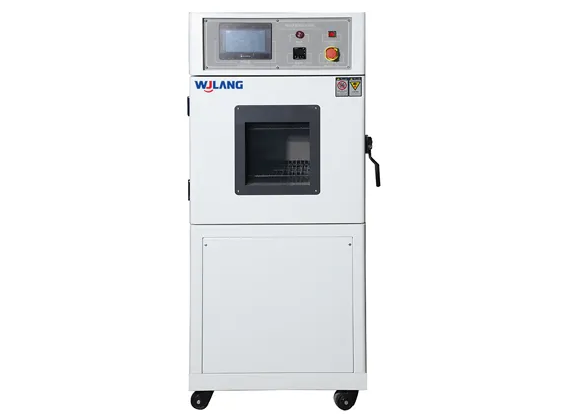

 Know More