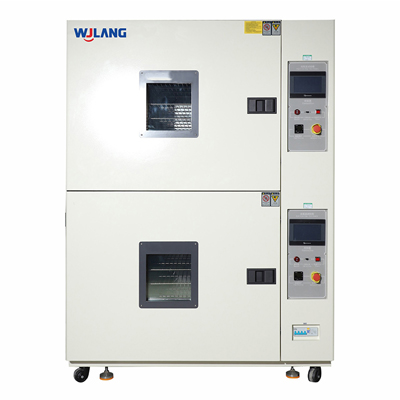
Selecting an environmental chamber is not simply a matter of choosing the widest temperature range or the lowest quotation. The equipment must reproduce the conditions that matter to your product, maintain those conditions around a real test load, record defensible data, and remain serviceable throughout years of repeated use. A chamber that looks impressive on a specification sheet can still produce weak results if airflow is blocked by the sample, the refrigeration system is undersized for the heat load, humidity control becomes unstable near the edge of the operating envelope, or the supplier cannot support calibration and replacement parts.
This guide is written for engineering managers, reliability teams, quality departments, laboratory planners and procurement professionals who need to compare chamber types without turning the purchase into a checklist of disconnected numbers. It explains how to translate a test standard and a product risk into an equipment configuration, how to distinguish the most important performance terms, how to evaluate total cost of ownership, and what information a qualified manufacturer should request before recommending a model.
WJLANG designs and manufactures reliability test equipment for electronics, automotive, new-energy and aerospace applications. Published WJLANG configurations include standard temperature and humidity systems with temperature options down to -70°C and up to 150°C, humidity control ranges up to 10% to 98% RH on selected models, rapid temperature-change systems with published linear rates from 5°C/min to 25°C/min, and air-to-air thermal shock systems designed for fast transfer between hot and cold zones. These figures are useful reference points, but the correct chamber must be selected against the actual specimen, test profile and installation conditions.
What Is an Environmental Chamber and What Problem Does It Solve?
An environmental chamber is controlled test equipment that exposes a specimen to repeatable temperature, humidity or rapid temperature-change conditions so engineers can evaluate durability, performance and failure risk before field use.
Products rarely fail because a single room-temperature measurement is inaccurate. They fail because materials expand at different rates, seals absorb moisture, adhesives soften, solder joints fatigue, batteries generate heat, coatings crack, connectors lose contact, plastics become brittle, or electronic parameters drift after repeated environmental stress. An environmental chamber gives a laboratory a controlled way to accelerate or reproduce those stresses. The objective is not to imitate every moment of a product’s life; it is to create a defined condition that can reveal weaknesses, compare designs, verify process changes or demonstrate compliance with a test method.
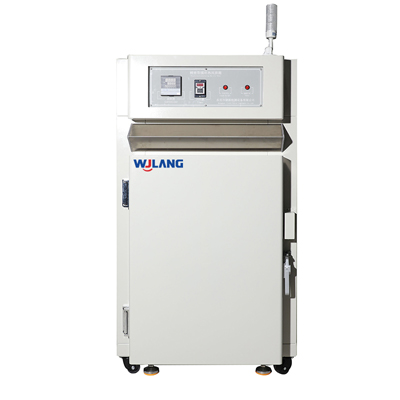
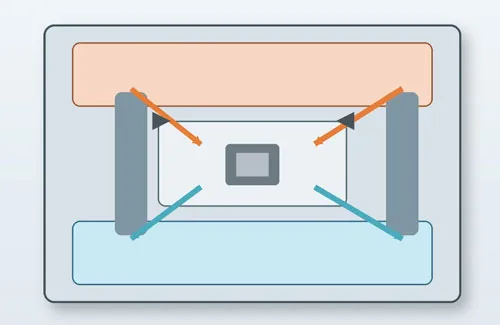
The broad term environmental chamber includes several equipment families. A temperature chamber controls hot and cold conditions. A temperature and humidity chamber adds moisture control. A rapid thermal cycling chamber changes temperature at a controlled rate. A thermal shock chamber moves the specimen or conditioned air between sharply different zones. A benchtop chamber provides a small workspace for compact components. A walk-in or custom chamber accommodates large assemblies, high heat loads or unusual interfaces. Industrial ovens are adjacent equipment used when the process requires heating, drying, aging or curing rather than a controlled cold or humidity environment.
The first buying decision is therefore not “Which model is best?” It is “Which environmental stress must be controlled, measured and repeated?” Once that is clear, specifications become meaningful.

How Do the Main Environmental Chamber Types Differ?
Environmental chamber types differ mainly by the stress they create, the speed of change, the usable workspace, the control variables and the way the specimen exchanges heat and moisture with conditioned air.
A standard temperature chamber is appropriate when the test requires a stable hot or cold condition, a programmed sequence, or a moderate rate of change. A temperature and humidity chamber is needed when moisture absorption, condensation risk, corrosion, insulation resistance or packaging behavior matters. A rapid thermal cycling chamber is selected when engineers need controlled ramps over many cycles. A thermal shock chamber is used when the transition itself is intentionally severe and must occur within seconds or a few minutes. A small chamber is valuable when the sample is compact and laboratory space is limited. A custom chamber is justified when the specimen, heat generation, fixturing, ports, safety requirements or automation cannot be handled by a standard platform.
| Chamber type | Primary controlled condition | Typical engineering question | Important buying parameters | Common selection risk |
|---|
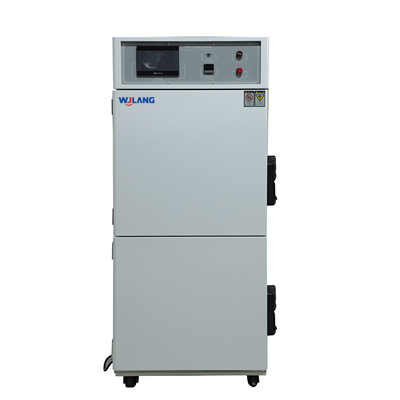
| Standard temperature chamber | Hot and cold temperature | Will the product operate, start, store or recover at specified temperatures? | Range, stability, uniformity, heating/cooling time, load capacity | Choosing by empty-chamber rate without considering specimen heat capacity |
| Temperature and humidity chamber | Temperature plus relative humidity | How will moisture, condensation or long exposure affect materials and electronics? | Achievable temperature/RH envelope, sensor method, water quality, recovery | Assuming the full humidity range is available at every temperature |
| Rapid thermal cycling chamber | Programmed temperature ramps | How quickly do repeated expansions and contractions reveal fatigue or drift? | Linear rate, working range, specimen response, refrigeration capacity, airflow | Comparing advertised maximum rate instead of rate with the real load |
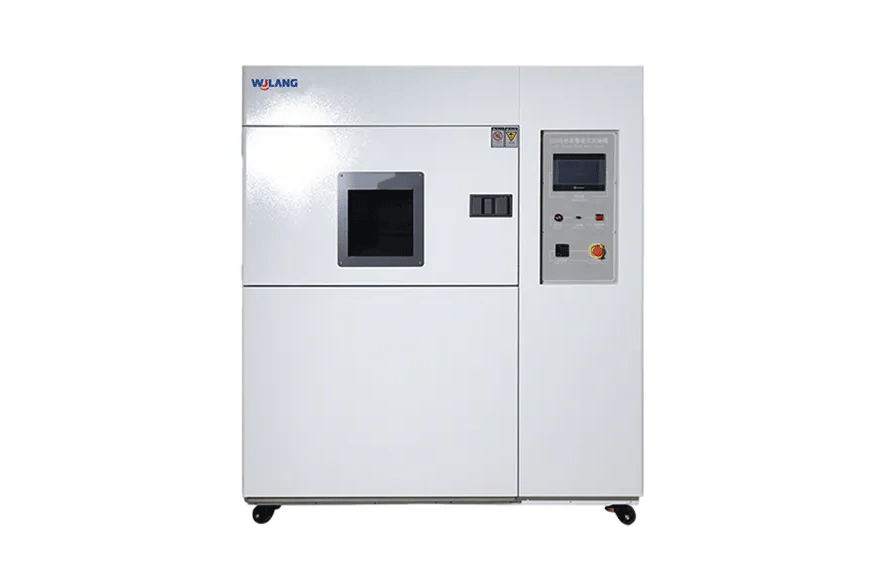
| Air-to-air thermal shock chamber | Very fast transition between hot and cold zones | Will interfaces, joints and materials survive abrupt temperature change? | Transfer time, recovery time, zone storage temperatures, specimen mass | Using thermal shock when the governing method requires controlled cycling |
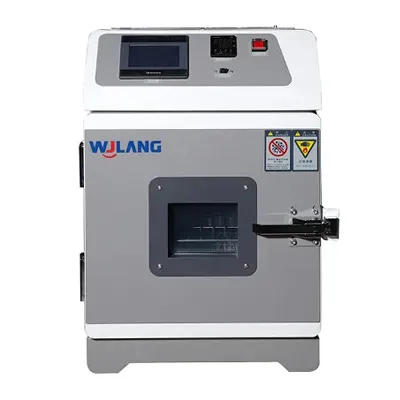
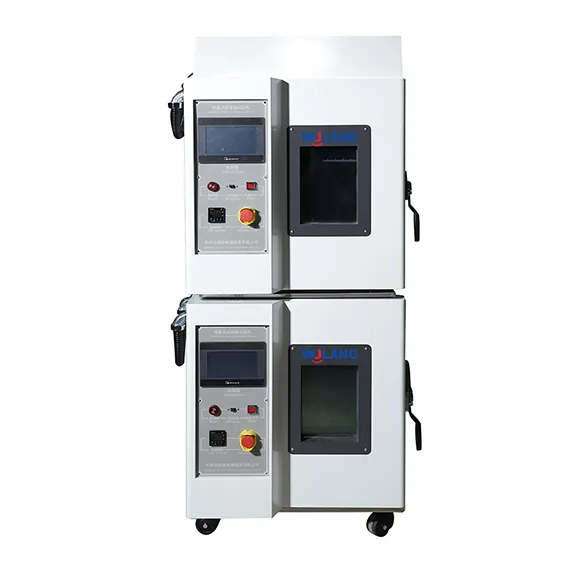
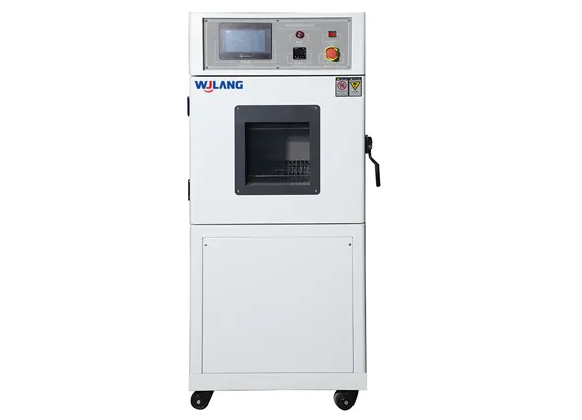
| Benchtop or small chamber | Temperature and optionally humidity in a compact volume | Can component-level tests be performed near an R&D bench or production line? | Workspace, power, noise, door orientation, ports, heat rejection | Overloading the small airflow path or placing a hot specimen inside |
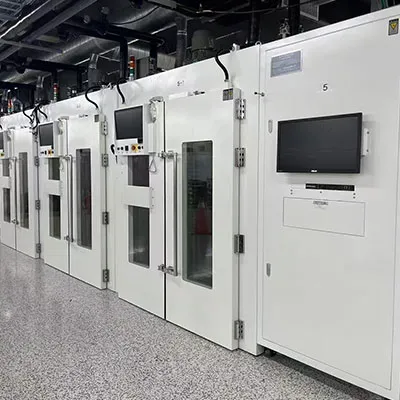
| Walk-in or custom chamber | Application-specific environment | How can a large assembly, vehicle part, rack or integrated system be tested? | Internal dimensions, floor loading, heat load, doors, utilities, safety, controls | Under-specifying installation and facility requirements |
These categories can overlap. A temperature and humidity chamber may also perform moderate cycling. A rapid thermal cycle chamber may offer humidity within a narrower operating area. A compact unit may have high performance but a limited load. A custom chamber may combine multiple subsystems. The equipment name alone does not confirm suitability; the performance envelope and test method must be reviewed together.
Which Environmental Chamber Specifications Matter Most?
The most important environmental chamber specifications are the usable operating range, control stability, spatial uniformity, rate of change, recovery under load, workspace and the conditions under which each value was measured.
Temperature range identifies the minimum and maximum setpoints the chamber can reach under defined conditions. It does not automatically mean that every humidity level, ramp rate or load can be maintained across the complete range. For example, WJLANG publishes standard temperature and humidity configurations with selected low-temperature options down to -70°C and a high limit of 150°C. The purchase specification should state the actual test range, not simply copy the widest available range. A laboratory that tests from -20°C to 85°C may gain more from better uniformity, faster recovery and lower energy use than from paying for a -70°C refrigeration system.
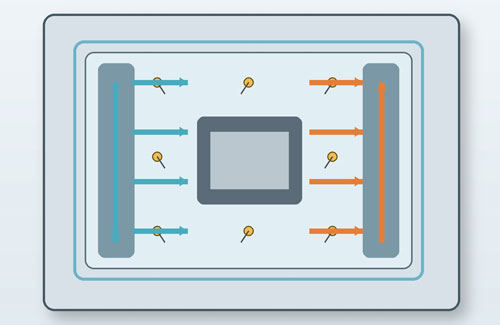
Temperature stability describes how much the measured control point fluctuates after the chamber reaches a steady condition. Temperature uniformity or distribution deviation describes differences among locations in the workspace. These terms are not interchangeable. A controller can hold one sensor at ±0.3°C while corners of a heavily loaded workspace differ by several degrees. Ask how many measurement points were used, where they were placed, whether the test was empty or loaded, and how long the chamber was allowed to stabilize.
Humidity range must be read as an operating envelope rather than a rectangle. Relative humidity depends on temperature, water-vapor content, refrigeration capacity and the control method. Extremely low humidity at low temperature or very high humidity at high temperature may be physically difficult or outside the standard operating envelope. A supplier should provide a temperature-humidity controllable range chart and explain water-quality, drainage and condensation requirements.
Ramp rate can be stated as an average, a maximum, a linear controlled rate or an air-temperature change measured between selected points. These definitions produce very different results. WJLANG rapid-rate systems publish options such as 5°C/min, 10°C/min, 15°C/min and 25°C/min within specified working ranges. The buyer should ask whether the value is measured with an empty chamber, with a standard load, or with the proposed specimen. The specimen temperature usually lags behind the air temperature; a dense metal assembly and a small printed circuit board will not follow the same curve.
Heating and cooling time is useful for cycle-time estimates, but it should be tied to start and end temperatures, ambient conditions, cooling-water conditions when applicable, and load. Published examples may state room temperature to 100°C in about 25 minutes or room temperature to -70°C in about 65 minutes for a particular model. These are model-specific values, not universal promises.
Workspace volume should be selected from specimen dimensions plus clearance for airflow, sensors, cables and fixtures. A common rule in practical chamber planning is to avoid filling the working volume so densely that conditioned air cannot circulate around the sample. There is no single percentage that applies to every geometry; a flat panel may block airflow more than a compact object with the same volume. The chamber manufacturer should review a drawing or photograph of the loaded configuration.
Heat load is critical for powered devices, batteries, motors, power electronics and multiple energized specimens. A chamber designed for passive samples may not remove the heat generated by an operating product. The RFQ should state average and peak heat dissipation in watts, duty cycle, voltage, cable requirements and whether failures can release gas, smoke or energy.
Ports, fixtures and interfaces affect both usability and performance. Cable ports, observation windows, shelves, specimen supports, pressure equalization, external sensors, network communication, USB or SD data export and remote monitoring should be specified before manufacture. Adding a large port later can disturb insulation and airflow.
How Should a Temperature and Humidity Chamber Be Matched to the Test Method?
A temperature and humidity chamber should be matched by converting the test method into a complete operating profile that includes setpoints, tolerances, dwell times, transition rates, specimen state and measurement requirements.
The standard or internal method is the starting point, but a standard number alone is not enough. Different methods within the IEC 60068 family, automotive specifications, aerospace procedures, customer requirements and company qualification plans may use different severities and specimen states. Procurement should obtain the exact test procedure from engineering and identify the following information: low and high setpoints, humidity setpoints, transition limits, dwell definition, number of cycles, specimen powered or unpowered state, allowed interruptions, sensor locations and required records.
For cold and dry-heat tests, the main concerns are range, stability, uniformity and the ability to condition the specimen. For damp-heat tests, the humidity envelope, water system, condensation management and sensor maintenance become central. For rapid cycling, refrigeration power, heater power, airflow and specimen lag determine whether the programmed rate is meaningful. If the test requires abrupt transfer between established hot and cold environments, a thermal shock test chamber may be more appropriate than a conventional cycling chamber.
Engineers should also distinguish between chamber-air stabilization and specimen stabilization. A method may define dwell after the specimen reaches a condition, not merely after the controller reaches setpoint. When the specimen contains dense metal, liquid, insulation or active electronics, additional thermocouples may be required. A chamber can meet its air-temperature specification while the test article remains far from the intended temperature.
The best procurement document states the acceptance test in the same language as the operating requirement. Instead of writing “fast cooling,” specify the start and end temperatures, linear or average rate, load description, sensor method and allowable deviation. Instead of writing “high humidity,” specify the temperature/RH point, dwell, tolerance and condensation expectation. This reduces disputes during factory acceptance testing.
How Do Product Size, Mass and Heat Generation Change Chamber Selection?
Product size, thermal mass and internal heat generation change chamber performance because they alter airflow resistance, energy demand, stabilization time and the amount of heat the refrigeration system must remove.
A small electronics module may appear easy to test, but ten powered modules can create a significant heat load. A large aluminum housing may not generate heat, yet its thermal mass can slow every transition. A battery pack combines mass, heat generation, safety risk and gas-management requirements. A rack of products can create channels that bypass critical areas. These differences explain why a model selected from internal dimensions alone may fail to deliver the required cycle.
For passive specimens, provide material, mass, dimensions, quantity, fixture mass and expected loading pattern. For powered specimens, add average and peak heat dissipation, operating mode and cable count. For moisture-sensitive tests, describe whether the sample releases vapor or absorbs water. For hazardous or energetic products, provide the risk assessment and required protection systems. The chamber supplier can then calculate or simulate the thermal load, select refrigeration capacity, define airflow and recommend safety options.
A useful acceptance approach is to test with a representative dummy load or actual specimen. The factory acceptance test can verify setpoint achievement, uniformity, recovery and alarm functions under a documented configuration. This produces much stronger evidence than an empty-chamber demonstration.
Environmental Chamber for Sale: How Should Total Cost of Ownership Be Evaluated?
The total cost of an environmental chamber includes purchase price, installation, utilities, test throughput, maintenance, calibration, downtime, spare parts and the cost of invalid or delayed test data.
Two quotations can differ because they assume different refrigeration systems, insulation, components, controls, safety options, documentation, acceptance testing and service coverage. A lower purchase price is not automatically lower cost. A chamber that takes longer to recover can reduce daily throughput. A system that requires a cooling tower may increase facility cost. A poorly supported controller or compressor can create long downtime. Excess capacity can also waste energy and budget.
A practical comparison uses an annual cost model. Start with capital cost and expected service life. Add shipping, import, rigging, electrical work, cooling water, exhaust, compressed air or drainage. Estimate electricity and water from the expected test schedule rather than the nameplate maximum alone. Include preventive maintenance, calibration, consumables such as water filters, and likely replacement parts. Then estimate the value of laboratory time: how many cycles or specimens can be completed per week, and what does a missed project deadline cost?
Do not convert this model into a false universal price range. Environmental chambers vary too widely in volume, low-temperature capability, humidity system, rate, safety and customization. A more useful quotation comparison asks whether each supplier priced the same requirement and whether exclusions are clear.
| Cost category | Questions to ask | Hidden risk if ignored |
|---|
| Equipment configuration | Are temperature, humidity, rate, load, ports and safety options equivalent? | Low quotation omits a required subsystem |
| Facility installation | What electrical supply, heat rejection, water, drain, exhaust and floor loading are required? | Unexpected building work delays commissioning |
| Test throughput | How long is one complete loaded cycle including recovery and defrost? | Laboratory capacity is lower than planned |
| Maintenance and calibration | What tasks, intervals, consumables and local services are needed? | Data credibility or uptime declines |
| Spare parts and controls | Are controllers, sensors, compressors and relays documented and available? | Obsolete or proprietary parts cause long downtime |
| Warranty and support | What is included, who performs service and how are remote diagnostics handled? | Warranty exists on paper but cannot be used efficiently |
How Should Environmental Chamber Manufacturers Be Evaluated?
Environmental chamber manufacturers should be evaluated by engineering capability, evidence of performance, manufacturing control, documentation, acceptance testing, serviceability and the consistency of their company information.
Begin with application competence. A qualified supplier asks about the test before recommending a model. It should request the specimen, load, profile, standard, utilities and safety conditions. A quotation that arrives without these questions may be based on a generic configuration.
Review manufacturing scope. Ask which activities are performed internally: mechanical design, refrigeration design, airflow design, electrical engineering, control programming, sheet-metal fabrication, assembly and testing. Internal capability is not automatically superior, but traceability should be clear. Request photographs or video of manufacturing, wiring, refrigeration assembly and factory acceptance testing that correspond to the offered product family.
Ask for performance evidence. This can include chamber mapping data, controller records, calibration certificates, test curves, recovery tests and model-specific specification sheets. The evidence should distinguish stability, uniformity and deviation, and should identify the measurement condition. Marketing statements such as “high precision” are not substitutes for a documented test.
Evaluate documentation. A professional supply package normally includes drawings, utility requirements, operating instructions, maintenance procedures, alarm descriptions, electrical diagrams, parts lists, calibration information and acceptance records. For international projects, confirm the language and units before ordering.
Examine serviceability. Determine where critical parts can be sourced, whether remote diagnostics are available, whether software backups are supplied, how warranty cases are handled and what preventive maintenance is expected. WJLANG states that its service program includes installation, startup and training, preventive maintenance, calibration, repair and parts replacement, with a one-year whole-machine warranty under stated conditions. Buyers should confirm the exact commercial terms in the contract.
Finally, verify entity consistency. The legal company name, factory location, sales office, address, telephone, email and manufacturing claims should agree across the website, quotation, invoice and certification documents. If a company operates in Vietnam and manufactures in China, that relationship should be explained rather than implied inconsistently. Clear identity is an important trust signal for both procurement teams and search engines.
What Information Should Be Included in an Environmental Chamber RFQ?
An environmental chamber RFQ should describe the specimen, test profile, performance tolerances, utilities, safety conditions, documentation and acceptance criteria in enough detail for suppliers to quote the same requirement.
A strong RFQ begins with the product and purpose. State what is being tested, the failure modes of concern and whether the chamber is for qualification, production screening, research or storage. Add sample dimensions, mass, quantity, materials and fixture arrangement. If the product operates during the test, provide its heat generation and power requirements.
Next, define the profile. Include temperature and humidity setpoints, transitions, dwell, cycle count and whether the specimen must reach temperature before dwell begins. State the desired ramp as linear or average and identify the measurement point. For thermal shock, specify transfer time, zone conditions and recovery. For humidity, provide the required points and allowable condensation.
Then define the equipment and site. List the minimum usable workspace, shelves, ports, window, cable routing, data communication, remote monitoring, water supply, drain, cooling method, power supply, ambient temperature and available installation space. Add noise or heat-rejection limits when the chamber will be placed near offices or other sensitive equipment.
Safety requirements should be based on the specimen. Batteries, flammable solvents, pressure vessels, energized high-voltage products and gas-releasing materials require special review. Do not request “explosion-proof” as a generic option without defining the hazard and applicable code. The supplier needs to understand the energy, materials, possible failure modes and facility controls.
Finally, state the deliverables and acceptance test. Identify required drawings, manuals, calibration, training, spare parts, certificates, language, warranty, installation and FAT/SAT procedures. A well-defined RFQ reduces quotation differences and makes the final purchase decision auditable.
How Does WJLANG Configure an Environmental Test Chamber?
WJLANG configures an environmental test chamber by matching the required stress profile, specimen load, workspace, control accuracy, utilities and service needs to a standard or customized equipment platform.
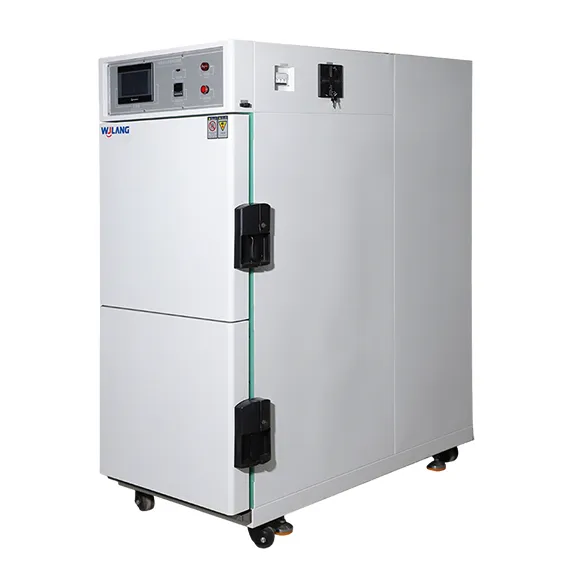
The product range covers compact and floor-standing temperature systems, humidity-controlled chambers, rapid thermal cycling equipment, thermal shock systems, industrial ovens and specialty configurations. A standard temperature and humidity chamber can be selected from multiple internal volumes and low-temperature options, while compact models support component-level tests where laboratory space is limited. Rapid-rate platforms are intended for controlled temperature change, and thermal shock platforms are intended for abrupt transitions between conditioned zones.
For a useful recommendation, WJLANG should receive the test profile and specimen information rather than only a model request. The engineering review can then identify the temperature system, humidity subsystem, refrigeration capacity, airflow, workspace, ports, controls and safety options. Where a standard model is suitable, customization can be limited to interfaces and accessories. Where the load or process is unusual, the design may require a custom chamber or integrated system.
The final proposal should make the assumptions visible. It should state the performance condition, load, utilities, options, documentation, FAT procedure, installation scope and warranty. Buyers can then compare the proposal against the same engineering requirement instead of comparing model names alone.
Frequently Asked Questions About Environmental Chambers
These frequently asked questions address the most common technical and purchasing decisions that arise before an environmental chamber is specified and ordered.
1. What is the difference between an environmental chamber and a climatic chamber?
The terms often overlap. “Environmental chamber” is the broader expression for controlled test equipment, while “climatic chamber” commonly refers to temperature and humidity simulation. Always compare the controlled variables and performance envelope rather than relying on the name.
2. How much clearance should be left around a test specimen?
Clearance must allow conditioned air to reach all critical surfaces without the specimen or fixture blocking supply and return paths. The correct spacing depends on geometry, airflow direction and heat load, so the loaded arrangement should be reviewed by the manufacturer.
3. Is the advertised ramp rate the same as the specimen temperature-change rate?
No. Advertised ramp rate usually refers to chamber air under defined conditions. The specimen changes more slowly depending on mass, material, surface area, fixture and heat generation. Use specimen thermocouples when the test requirement concerns product temperature.
4. When is a benchtop chamber better than a floor-standing chamber?
A benchtop chamber is suitable for small passive or low-heat components, limited laboratory space and moderate throughput. A floor-standing chamber is usually better for larger loads, more fixtures, higher heat generation or broader performance options.
5. What information is needed to receive an accurate quotation?
Provide specimen dimensions, mass, quantity, heat generation, temperature and humidity profile, ramp rate, dwell, standard, workspace, ports, utilities, safety conditions, documentation and acceptance requirements.
6. How often should an environmental chamber be calibrated?
The interval should follow the laboratory quality system, equipment use, test criticality, historical drift and applicable customer or standard requirements. Many organizations use a scheduled annual interval, but higher-risk or heavily used equipment may require more frequent checks.
Conclusion
The best environmental chamber is the system that reproduces the required test around the real specimen, produces traceable data, fits the facility and can be maintained throughout its intended service life.
A disciplined purchase starts with the failure risk and test method, not the catalog. Translate the method into setpoints, tolerances, transitions, dwell, load and records. Compare chamber types by what they control and how quickly the specimen must respond. Read stability, uniformity, ramp rate and recovery with their measurement conditions. Include installation, throughput, calibration, downtime and service in the cost model. Finally, evaluate the manufacturer through evidence: model-specific test data, engineering review, manufacturing traceability, documentation, factory acceptance testing and support.
WJLANG can use this information to recommend a standard configuration or develop a custom solution. A complete test profile and specimen description will lead to a more accurate quotation and a chamber that is easier to validate after installation.
References
IEC 60068-2-1:2025, Cold tests: https://webstore.iec.ch/en/publication/82354
IEC 60068-2-2:2025, Dry heat tests: https://webstore.iec.ch/en/publication/82355
IEC 60068-2-78:2025, Damp heat, steady state: https://webstore.iec.ch/en/publication/82357
Vietnam Wujinglang Technology
Vietnam Wujinglang Co., Ltd. is a high-precision reliability test equipment R&D & manufacturing provider, offering global environmental simulation and extreme test solutions for electronics, automobiles, aerospace, adhering to customer-first culture for sustainable development.
 English
  日本語
日本語  한국어
한국어  français
  Deutsch
  русский
  tiếng việt
  ไทย
ไทย  Malay
Malay 

 Know More